
St. Louis Truck Accident Lawyer
Attorney for Truck Accident Personal Injury Claim
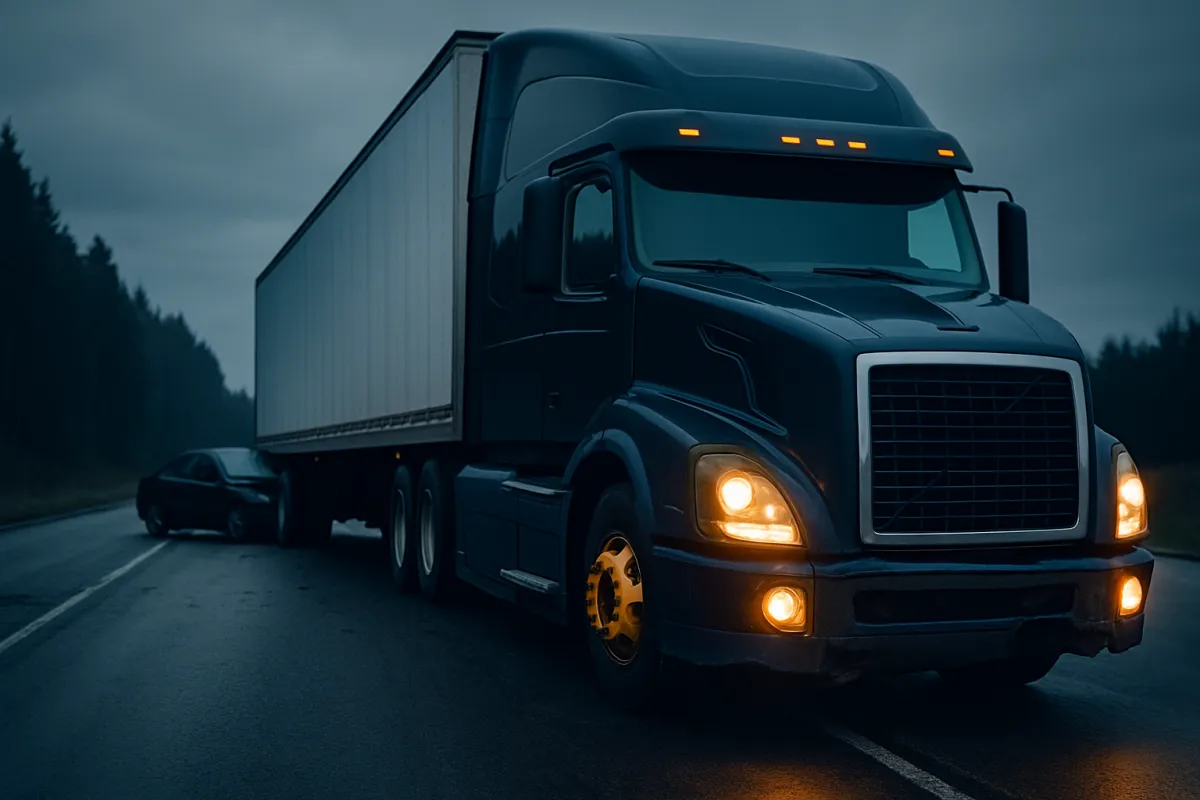
Truck Accident Lawyer in St. Louis, Missouri
Commercial truck accidents cause some of the most severe and life-altering injuries on Missouri roads. When an 80,000-pound tractor-trailer collides with a passenger vehicle, the consequences can be catastrophic. Wolff Trial Lawyers represents truck accident victims throughout the St. Louis metropolitan area and Missouri.
Truck accident cases are complex. Multiple parties may share liability. Lead attorney Alvin A. Wolff Jr. brings over 46 years of trial experience and board certification in civil trial law to every truck accident case we handle.
About Wolff Trial Lawyers
A St. Louis Truck Accident Law Firm
Wolff Trial Lawyers is a personal injury law firm that concentrates on truck accident cases and other serious injury claims. Our firm is led by Alvin A. Wolff Jr., a board-certified civil trial lawyer who has practiced since 1979.
- 46+ years practicing personal injury law in Missouri and Colorado
- 7,500+ cases handled throughout the firm's history
- Board-certified civil trial lawyer (National Board of Trial Advocacy)
- Federal regulations knowledge including FMCSA compliance and hours-of-service violations
- Trial-ready representation — we prepare every case as if it will go to a jury
We work on a contingency fee basis, which means you pay no attorney fees unless we recover compensation for you.
Truck Accidents in St. Louis
A Major Freight Hub with Significant Truck Traffic
St. Louis serves as a critical logistics and freight corridor. I-70, I-64, I-44, and I-55 converge in the metro area, carrying thousands of commercial trucks daily.
Common Causes of Truck Accidents
Driver Factors
- Hours of service violations (driver fatigue)
- Distracted driving
- Speeding and aggressive driving
- Impaired driving
- Inadequate training
Company and Maintenance Factors
- Inadequate vehicle maintenance
- Pressure to meet delivery schedules
- Overloaded or improperly secured cargo
- Failure to comply with federal regulations
- Negligent hiring of unqualified drivers
Who Can Be Held Liable?
- Truck Driver
- Trucking Company
- Cargo Loading Company
- Maintenance Contractor
- Vehicle or Parts Manufacturer
Catastrophic Injuries in Truck Accidents
Severe Physical Injuries
- Traumatic brain injuries (TBI)
- Spinal cord injuries and paralysis
- Severe burns and scarring
- Multiple fractures and crush injuries
- Amputation and limb loss
Long-Term Consequences
- Permanent disability
- Lifelong medical treatment
- Loss of earning capacity
- Chronic pain and suffering
- Wrongful death
Federal Motor Carrier Safety Regulations
FMCSA Rules Governing Commercial Trucking
Commercial trucking is governed by Federal Motor Carrier Safety Regulations established by the FMCSA. Violations of these regulations can establish negligence in truck accident cases.
Critical Evidence in Truck Accident Cases
Black Box Data, Driver Logs, and More
Truck accident cases require extensive documentation. Critical evidence includes black box (ECM) data, driver logs, maintenance records, and company safety files.
Compensation in Truck Accident Cases
Economic Damages
- Medical Expenses
- Lost Wages
- Loss of Earning Capacity
- Property Damage
Non-Economic Damages
- Pain and Suffering
- Loss of Enjoyment of Life
- Disfigurement and Scarring
- Loss of Consortium
What To Do After a Truck Accident
- Seek Medical Attention Immediately
- Call 911 and File an Accident Report
- Document the Scene
- Obtain Truck Driver and Company Information
- Do Not Give Statements to Insurance Companies
- Contact an Attorney Immediately - Call Wolff Trial Lawyers at (314) 651-8631
Areas We Serve
Missouri: St. Louis City and St. Louis County, including Richmond Heights, Clayton, Brentwood, Chesterfield, and surrounding communities.
Colorado: Steamboat Springs and Northwest Colorado.
Truck Accident FAQ
Common questions about truck accident claims, federal regulations, liability, and working with an attorney.
Missouri's statute of limitations for personal injury claims is 5 years from the date of the accident (RSMo 516.120). However, waiting too long can make it harder to gather evidence. Contact an attorney immediately to protect your rights.
Yes. Under respondeat superior, employers can be held liable for negligent acts committed by employees. Trucking companies can also be held directly liable for negligent hiring, training, or maintenance.
Modern commercial trucks have electronic control modules (ECMs) that record speed, braking, and other data. This data can prove driver negligence. It may be overwritten after 30 days, so act quickly.
Compensation depends on injury severity, medical expenses, lost wages, and pain and suffering. Commercial trucks carry high-limit insurance policies, so compensation can be substantial in catastrophic injury cases.
Speak with an attorney before accepting any settlement. Trucking companies often make quick, low offers. Once you accept, you typically cannot seek additional compensation later.
Missouri follows pure comparative fault (RSMo 537.765). You can still recover compensation even if partially at fault — your recovery is reduced by your percentage of fault.
Have questions about your truck accident case? Contact Wolff Trial Lawyers for a free consultation.
(314) 651-8631Injured in a Truck Accident?
Contact Wolff Trial Lawyers for a free, confidential consultation. No fee unless we win your case.
(314) 651-8631Wolff Trial Lawyers
Address: 1034 S. Brentwood Blvd., Suite 1900A, Richmond Heights, MO 63117
Phone: (314) 651-8631
Disclaimer: The choice of a lawyer is an important decision and should not be based solely upon advertisements. Past results afford no guarantee of future results.
Schedule a Free Consultation

Meet St. Louis Personal Injury Lawyer
Alvin Wolff, J.D.
Alvin A. Wolff, Jr. is a distinguished St. Louis personal injury attorney with 46 years of experience handling more than 7,500 personal injury and medical malpractice cases, securing hundreds of millions of dollars in compensation for clients.
Known as “The St. Louis Personal Injury Law Firm,” Alvin and his team have earned Wolff Trial Lawyers a reputation for relentless advocacy, compassionate client care, and results-driven representation.
Relentless Advocacy = Real Results
Real World, Down-to-Earth Advice = No Jargon, No B.S.
Family Legacy of 100+ years in Personal Injury and Medical Malpractice Law
🎙️ Listen: Distracted Driving & What To Do After a Crash
Insights from a St. Louis Car Accident Lawyer on Staying Safe & Protecting Your Rights
In this episode, Alvin Wolff shares real-world advice about distracted driving dangers, what to do immediately after a crash, and how a car accident attorney can help protect your health and future claim.
Frequently Asked Questions
Do I have a personal injury case in Missouri?
You likely have a case if someone else's negligence caused you real harm — medical bills, lost income, lasting injuries, or the loss of a loved one. Missouri law requires four things to prove negligence: a duty of care, a breach of that duty, a direct link between the breach and your injury, and actual damages. The only way to know for sure is a free consultation. Call (314) 651-8631 — we'll tell you honestly whether there's a case worth pursuing.
How long do I have to file a claim in Missouri?
Most Missouri personal injury cases have a five-year statute of limitations under RSMo § 516.120 — the same five-year deadline applies to most Missouri car accident lawsuits. Medical malpractice is only two years, wrongful death is three, and claims against government entities can be much shorter. Don't wait on the longer end; evidence and witnesses disappear fast. Call (314) 651-8631 so we can protect your filing rights.
What does it cost to hire Wolff Trial Lawyers?
A: No recovery, no fee. We handle personal injury and medical malpractice cases on a contingency fee basis, agreed to in writing before we begin. Depending on what your case requires, there may still be case costs involved. We walk you through all of that at your free consultation. Your consultation is no pressure, no obligation.
Do I actually need a lawyer, or can I handle it myself?
You can handle it yourself, but Insurance Research Council studies have consistently found that represented claimants recover significantly more on average — even after attorney's fees. Adjusters are trained to close claims for as little as possible. An experienced St. Louis trial lawyer levels that field.
How much is my case worth?
Case value depends on your medical expenses, lost wages, future care, the severity and permanence of your injuries, how clearly fault falls on the other side, and the insurance coverage available. No honest lawyer can promise a specific number, and Missouri Bar rules prohibit us from doing so. What we can promise is a thorough valuation of every component of your claim.
What should I do right after a serious accident or injury in Missouri?
Get medical care immediately, report the incident in writing (police report, incident report, or hospital record), photograph everything, collect witness names, and do not give a recorded statement to an insurance company. Then call a St. Louis personal injury lawyer before accepting any settlement offer — initial offers are almost always a fraction of what the case is worth.
What if the accident was partly my fault? Can I still recover in Missouri?
Yes. Missouri follows a pure comparative fault rule from Gustafson v. Benda (Mo. 1983), which lets you recover even if you were up to 99% at fault — your compensation is simply reduced by your share of the blame. Insurance carriers work hard to inflate that share, which is exactly why representation matters.
How long will my case take?
Every personal injury case in St. Louis is different. A straightforward claim may resolve in a few months; a complex medical malpractice or catastrophic injury case that goes to trial can take a year or longer. We give you an honest timeline at your first consultation and keep you updated at every stage.
Will my case go to trial?
Most personal injury cases settle before trial, and we work hard to secure full value at the negotiating table. But insurance carriers pay more when they know the lawyer across the table will actually try the case — and Alvin Wolff, Jr. has tried over 100 cases to a jury verdict. Being trial-ready is what makes settlements bigger.
What kinds of cases does Wolff Trial Lawyers handle?
Serious personal injury and wrongful death matters throughout Missouri and Colorado — including medical malpractice, catastrophic injury, car and truck accidents, motorcycle and bicycle accidents, premises liability, slip and fall, dog bites, prescription errors, and negligent security. If you're not sure whether your situation fits, call and ask. If it isn't something we handle, we'll point you to someone who does.
Personal Injury Practice Areas

Personal Injury
Our team pursues compensation for medical bills, lost wages, pain and suffering.

Worker's Compensation
We guide workers through claims for medical care, lost income, and disability benefits

Medical Malpractice
When doctors or hospitals fail in their duty of care, we hold providers accountable.

Wrongful Death
We provide compassionate support to families after the wrongful death of a loved one.

Auto Accident
Need legal support after a car, truck or motorcycle crash? We secure your compensation.

Bicycle Accident
We stand up for injured cyclists suffering collisions and unsafe road conditions.
Dog Bite
We help victims of dog attacks, holding negligent owners responsible for serious injuries.

Premises Liability
We secure compensation for victims of unsafe property and slip-and-fall accidents..
Contact Us
Speak to An Attorney Today.
Important Disclosure:
The Missouri Bar requires a disclosure that contacting an attorney on this website does not constitute an attorney client relationship. Legal advice is not given here and any past case results listed have no bearing on what your case might be worth. Every case rises and falls on its own particular merits.
Company
Customer Care
Legal
Follow Us


Copyright 2026. Wolff Trial Lawyers. All Rights Reserved.